Everest Base Camp Millennium Trek
Overview
The England-based adventure travel company, KE Adventure Travel, organized and led this trip, which was timed to exactly coincide with reaching Everest Base Camp on New Year 2000. This auspicious timing has no other significance than to provide us party-poopers with a way to escape the hype of all the “New Millennium” activities back in civilization! So, together with thirteen other millenium escapees, I set out for 18 days into a region of the planet guaranteed to take my mind off all the normal concerns of civilization, and captivate my attention instead with the spectacle of the world’s highest mountains, and the realities of dealing with winter-time, high-altitude hiking and living. While this can’t be compared to an actual climb of Mt. Everest itself, there were plenty of strenuous physical challenges on the trip - some optional, and some a required part of the itinerary - to provide a tremendous feeling of accomplishment and personal satisfaction when we achieved them.
Highlights
The highlights in the itinerary were the optional dayhikes on the layover days where we could climb a local peak for a better view of the surrounding mountains. The first “peak,” Gokyo Ri (17,590 ft), was near the top of the Dudh Koshi Glacier Valley, and offered a sweeping view of the high peaks in the Khumbu Himalayas, including Mt. Everest, Lhotse, and Makalu. The next high point was the Cho La Pass itself (17,780 ft), which ended up being a very strenuous and long climb on steep snow and ice (6 hours up, 3 hours down), requiring an ice axe to cut steps and to self-arrest if needed. Once in the Khumbu Glacier Valley, the dayhike up Kala Pattar (18,490 ft) gave a magnificent view of Mt. Everest and neighboring peaks from close up, and then the hike on the glacier up to Everest Base Camp (17,780 ft) brought us as high as most of us were ever likely to get on this famous mountain. Needless to say, the scenery was breathtaking (and all those other cliches!).
The Team
Total trip “members:” 14 - Toni & Godwin Baron, Darren Cavedaschi, Tracey Dinar, Heather Gunn, Andy Holland, Helen Jordan, David Kemp, Ed Moseley, Simon Ripley, Elaine Robinson, Jon Walker, Dave Stuart, and me. (11 of these members were from Great Britain, 3 were from the United States.)
Western leader: Rex Munro (from Australia)
Nepalese support staff: 1 Sirdhar, 4 Sherpas, 8 Cooks, 15 Porters (approx. at the start), 2 Yakmen and 7 yaks (at the start).
The Sherpas: Dik, Kajee, Purna, Dani
Logistics
All food and group items were provided by KE, and the members only had to bring personal daytime and overnight items. We carried only the daytime items in our daypacks, and all other loads were (gratefully!) carried by the porters and yaks. We would typically get up around 7am (just after sunrise), have a hearty breakfast, start hiking around 9am, stop for lunch between noon and 2pm, then finish the trip to our destination for the day. Once in camp, the sherpas would set up the monstrous two-person tents for us, and we were free to relax for the rest of the day. Tea and snacks would be served around 4pm, and then dinner around 6pm, just after sunset. Basically, it was luxurious for a camping trip, and we only had to pack and unpack our own gear while the support crew took care of the rest.
Food & Meals
Meals were prepared by the cook crew, and typically served to us by the sherpas. The service started first thing in the morning - the sherpas would bring us a hot mug full of the beverage of our choice right to our tents at the appointed wake up time. Considering the cold temperatures we eventually encountered, this was a delightful (and necessary) enticement to get us out of our sleeping bags and start the day!
Once up, we always had a hot breakfast (porridge and eggs, or porridge and toast, or porridge and muesli, or porridge and...!), and were given a handful of candy and trail snacks for the day.
Lunch was usually a sit-down hot meal, starting with a hot lemon drink (we were never completely sure what it was, but it was hot and quite tasty...!) followed by several ample courses that were based on British or Nepalese cuisine. Ramen noodle soup was a popular starter, and fried potatoes (“chips”) made a frequent appearance as well, much to the delight of the British contingent!
Dinner always started with hot soup, and then consisted of three or four more courses that were either common Nepalese dishes, or local renditions of British dishes. Lentils and rice (dal baht) were a common favorite, often served with curried vegetables, or vegetables with a spiced tomato sauce. The food was always well-prepared and tasty, with ample spices to be interesting, and enough variety to satisfy our Western tastes. There was always plenty of it too, even for hearty eaters like me!
Weather & Climate
There’s no denying the fact that it’s cold during the winter in the Himalayas! It was regularly around zero degrees Fahrenheit overnight, and sometimes colder than that. Inside my tent, it reached around ten degrees F, one night, and was often in the low teens. Daytime temperatures were in the 60’s at the lower elevations, but only in the 20’s at our higher camps. With adequate (goose down) insulation, however, I was never uncomfortable, and at worst had to deal with the occasional cold hands and feet. (My personal worst enemy was the dryness of the air, and a sore, dry throat ended up taking away my voice after about five days, and I had no more than a whisper to communicate with for two weeks until we returned to moister air at the end of the trip!)
We enjoyed the typically fair wintertime weather in the Himalayas; after the monsoons have ended, the weather usually stays clear and dry for weeks on end. We encountered only a few days with a bit of fog, and the remaining time we had bright blue skies all day long! In the valleys, we were sheltered from the wind, but on the ridges or peaks and passes, we often had a brisk breeze to contend with. Overall, there was nothing extreme about the conditions we faced, and with proper management of clothing layers and ample hot drinks, it was easy to stay comfortable.
The Journey, Day by Day
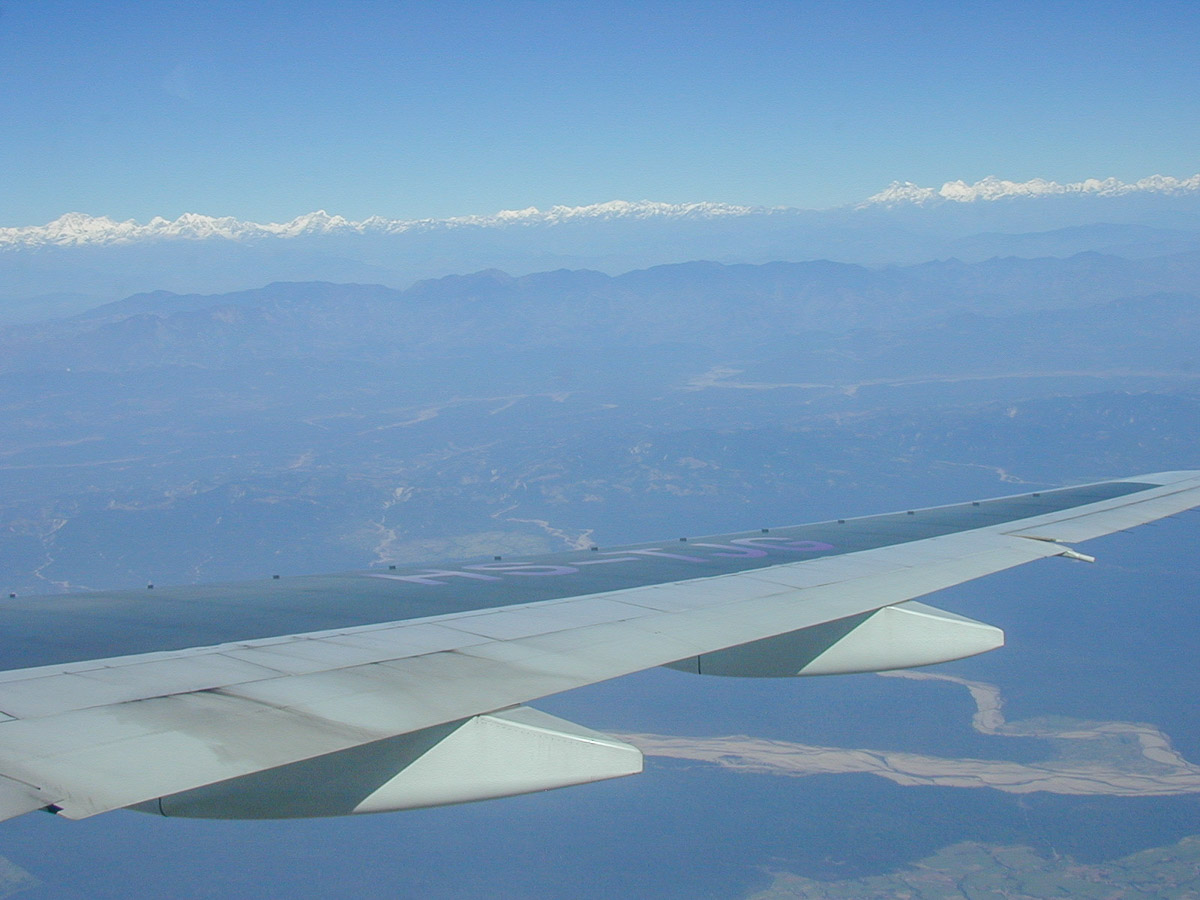
First views of some unbelievably vertical terrain... not a flat spot to be found! We arrive in Kathmandu, then fly to Lukla, the launching point for treks and expeditions into the Everest region of the Himalayas.
View Gallery → 13 photos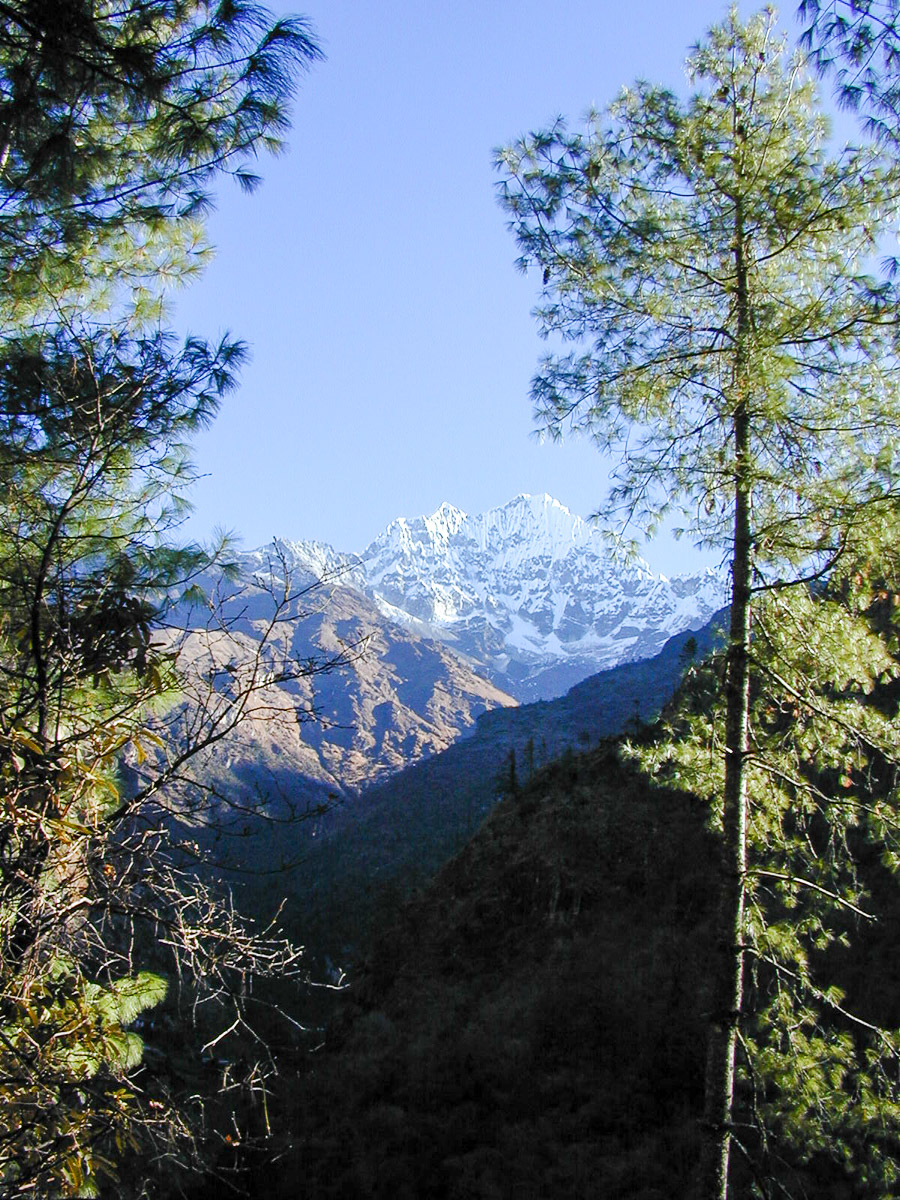
Several exciting river crossings on suspended bridges bring us up the valley to the colorful trading town of Namche Bazaar.
View Gallery → 18 photos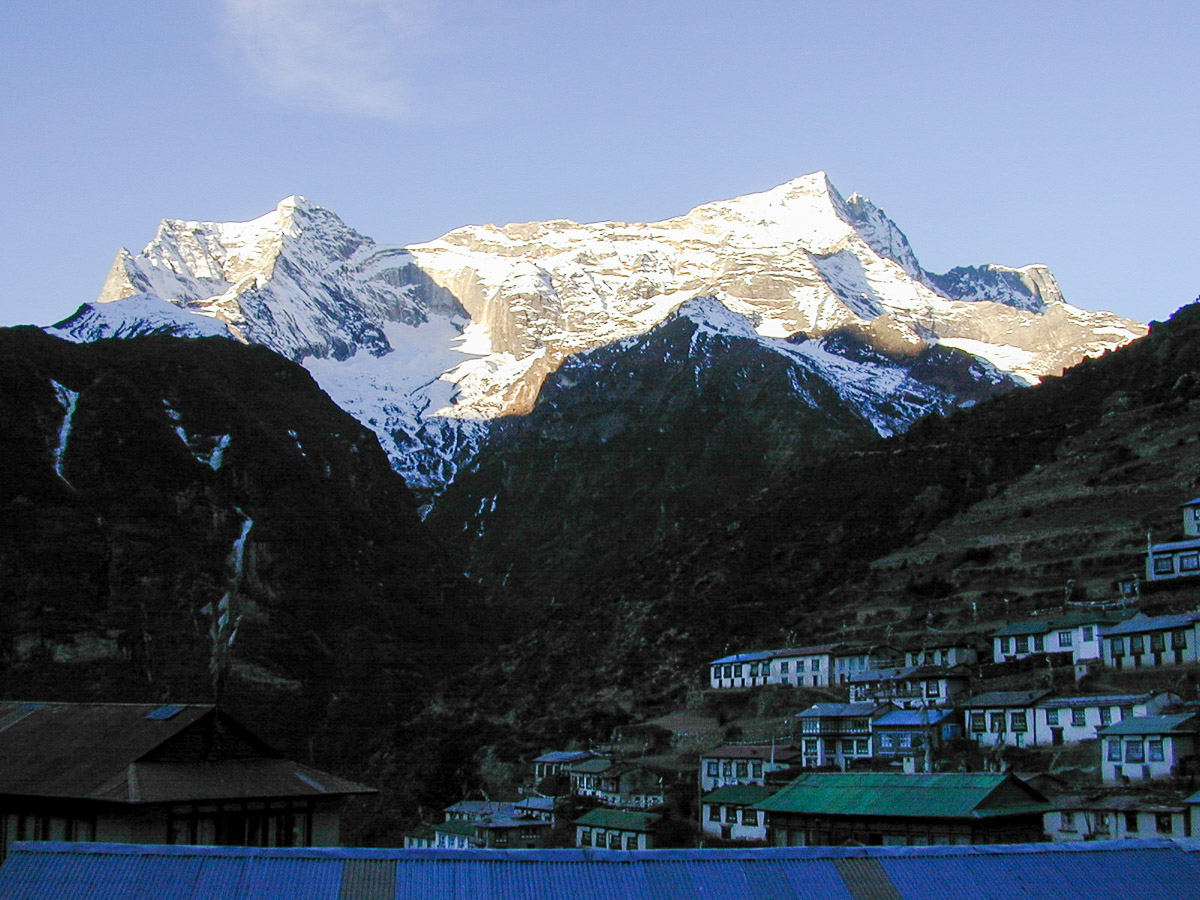
A steep climb to the top of the ridges above Namche Bazaar is rewarded with terrific views all the way up the valley past majestic Ama Dablam to Mt. Everest itself.
View Gallery → 18 photos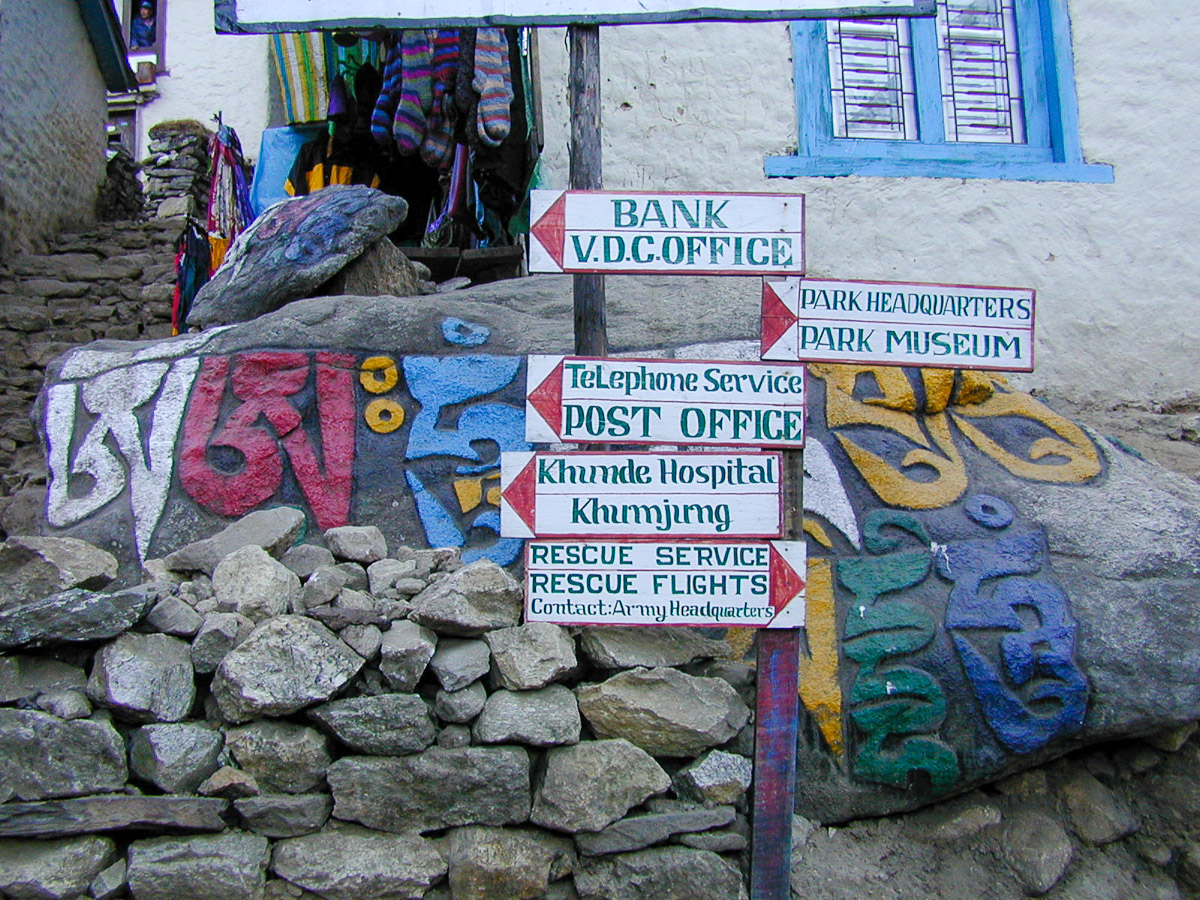
A windy, then misty morning ended up giving beautiful glimpses of sunlit peaks above the fog.
View Gallery → 13 photos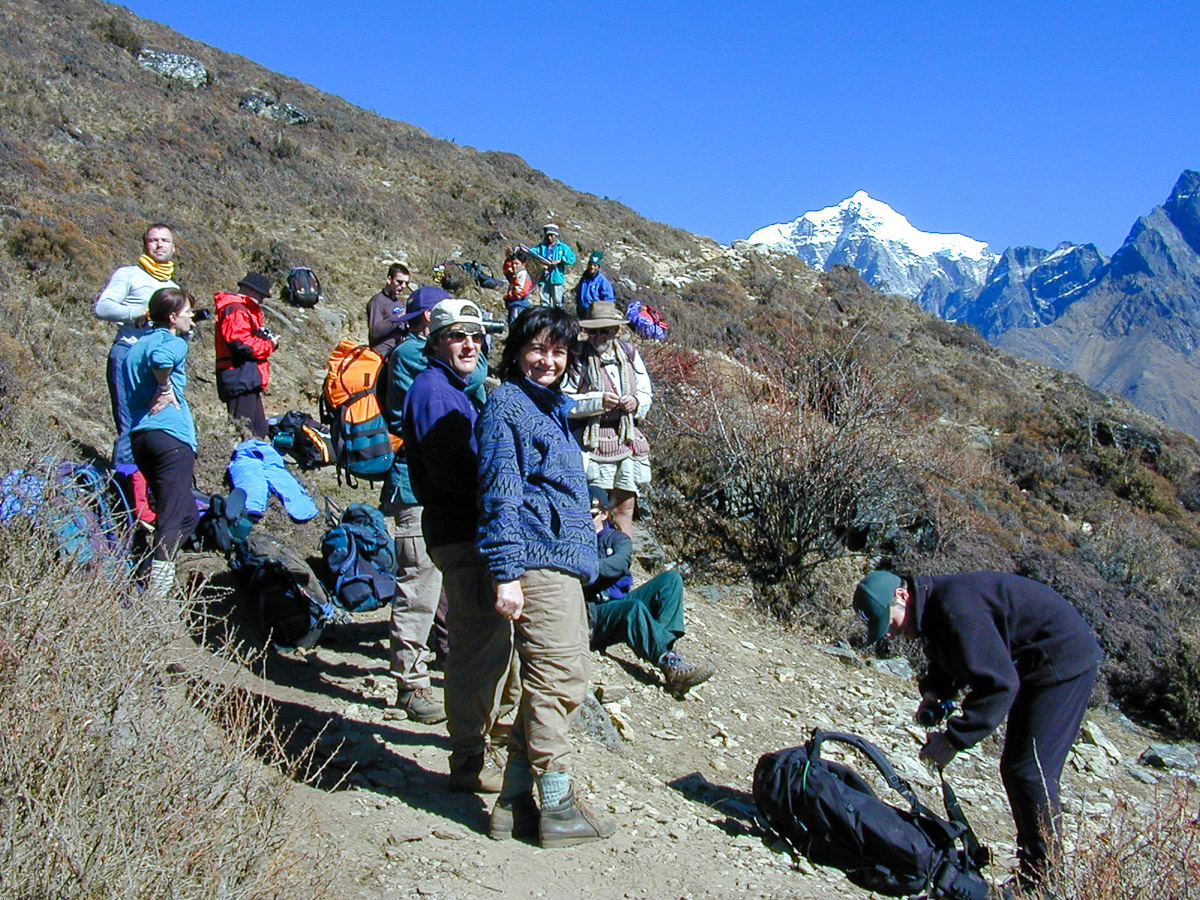
Continuing ever higher, we take the left fork into the upper Dudh Koshi River Valley, where we start getting views of the over-8000m peak of Cho Oyu.
View Gallery → 9 photos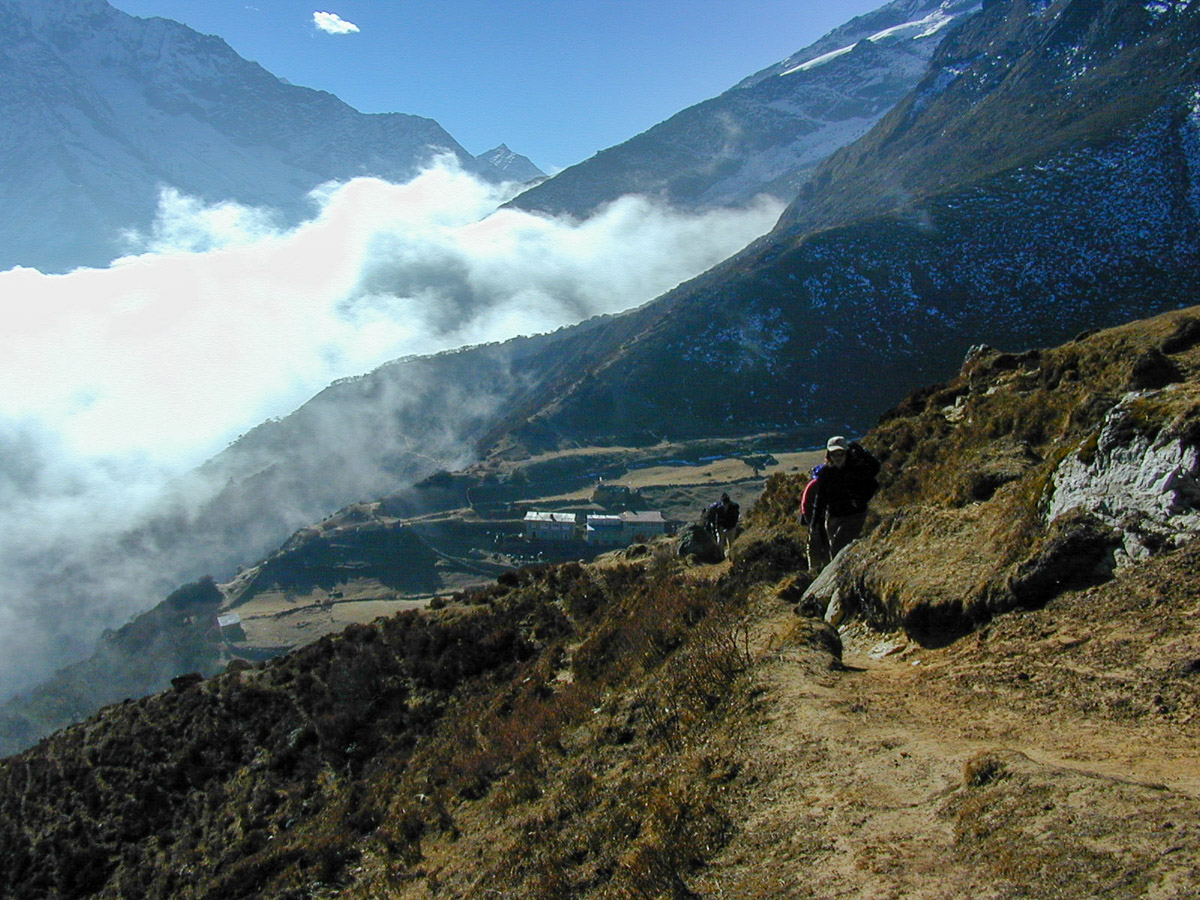
The greenery around us starts to disappear as we ascend above timberline - directly up the valley towards Cho Oyu, but Andy has brought some appropriate greenery with him so we can have a proper Christmas celebration!
View Gallery → 10 photos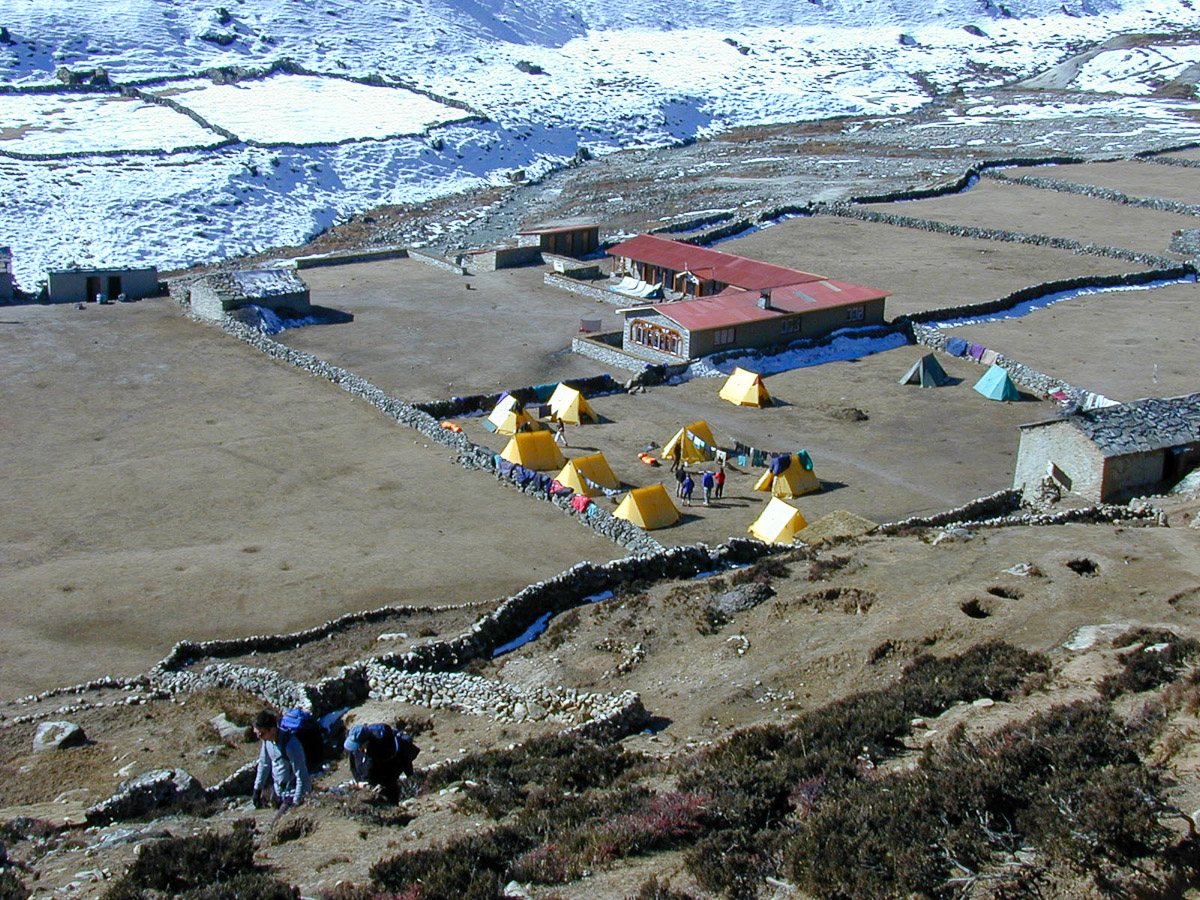
Sherpa Purna and I climb high enough to get a great view of Mt. Everest and Lhotse, and an amazing panorama appears above the mist before we have to race back down to join the group for a cozy Christmas dinner.
View Gallery → 15 photos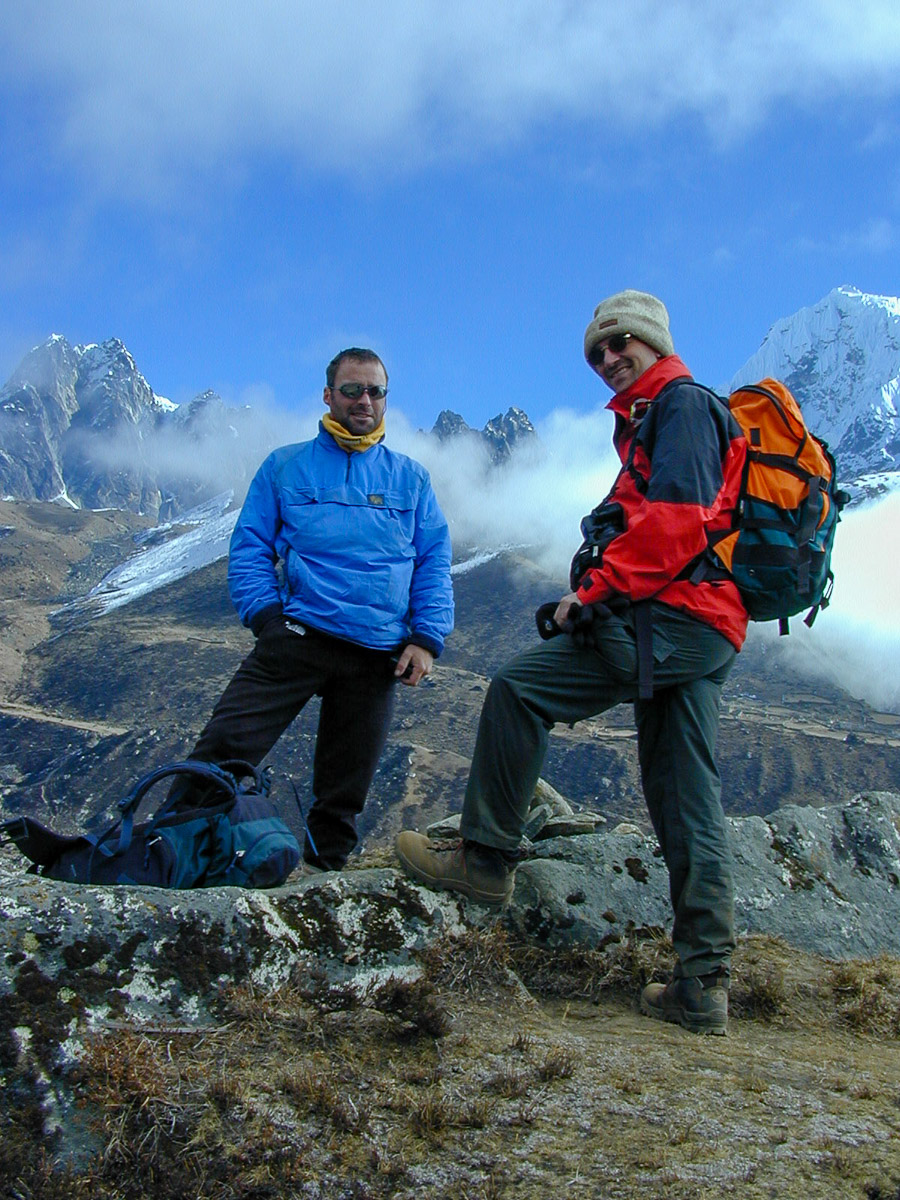
A misty, cold day reminds us that we’re still gaining altitude, as if the frozen lakes and icefalls beside the glacier weren’t clear enough clues!
View Gallery → 8 photos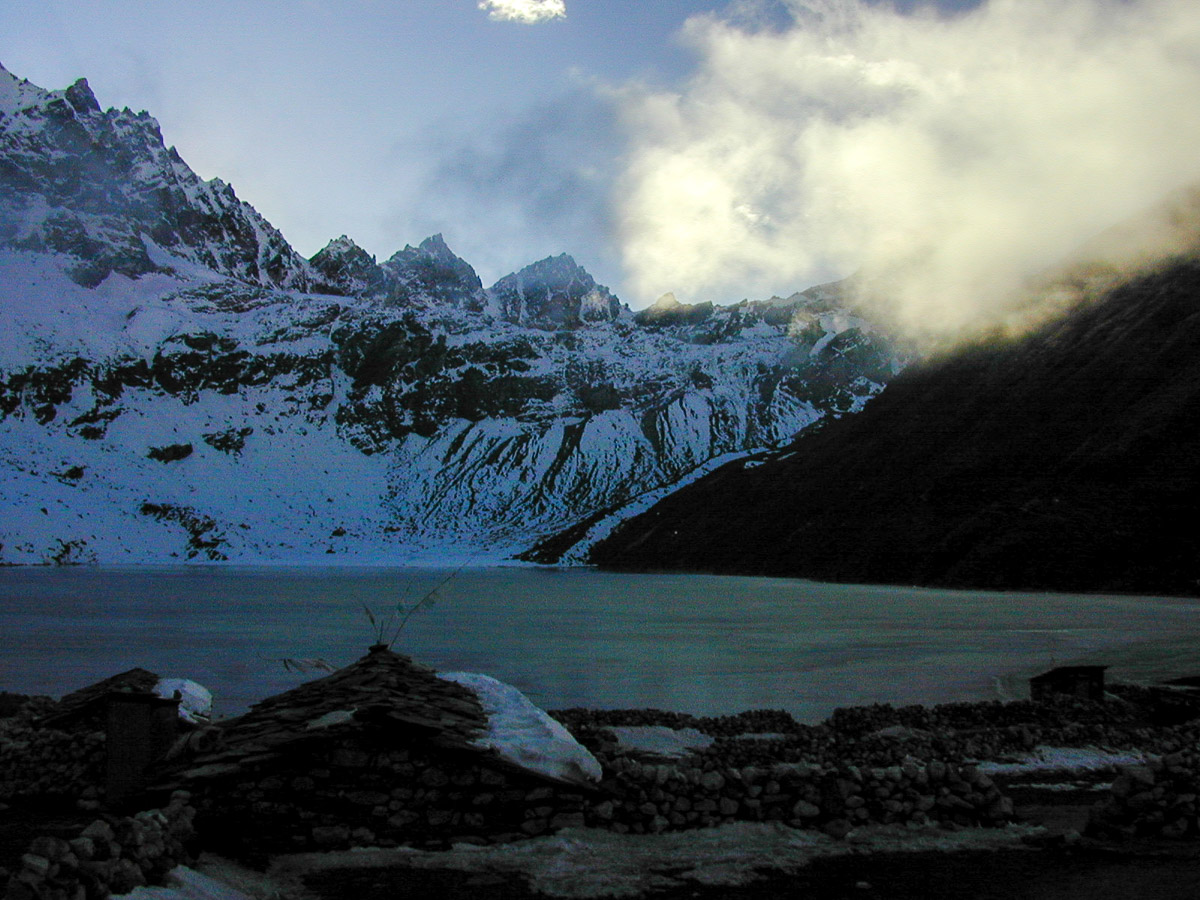
Starting before dawn, the sunrise gives beautiful lighting on the mountains and lakes as we climb to 17,590 ft. for a full panoramic view of all the major peaks in the region.
View Gallery → 22 photos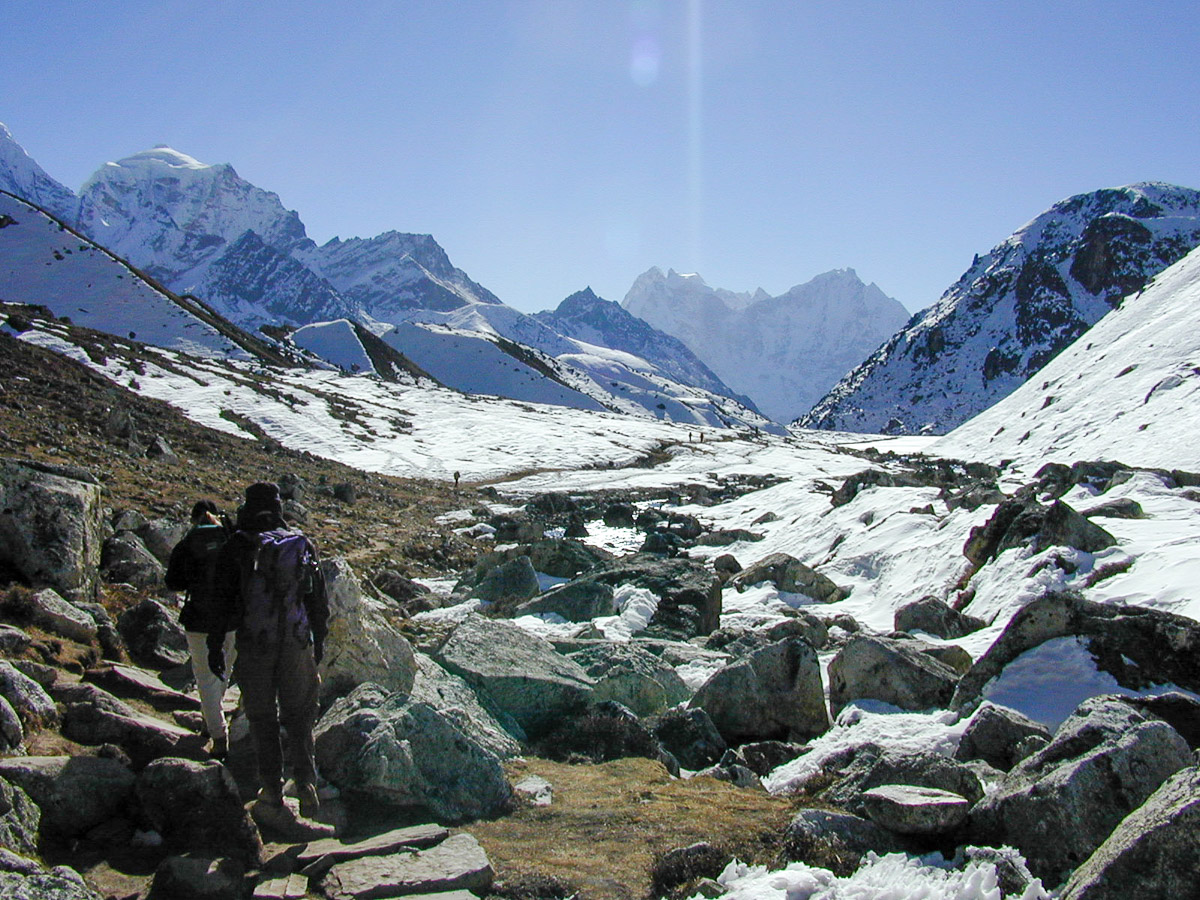
We cross the Ngozumba Glacier on wonderfully sculpted snowy, rocky, icy terrain... a mere hint of what’s to come the next day as we get psyched to cross the Cho La Pass.
View Gallery → 13 photos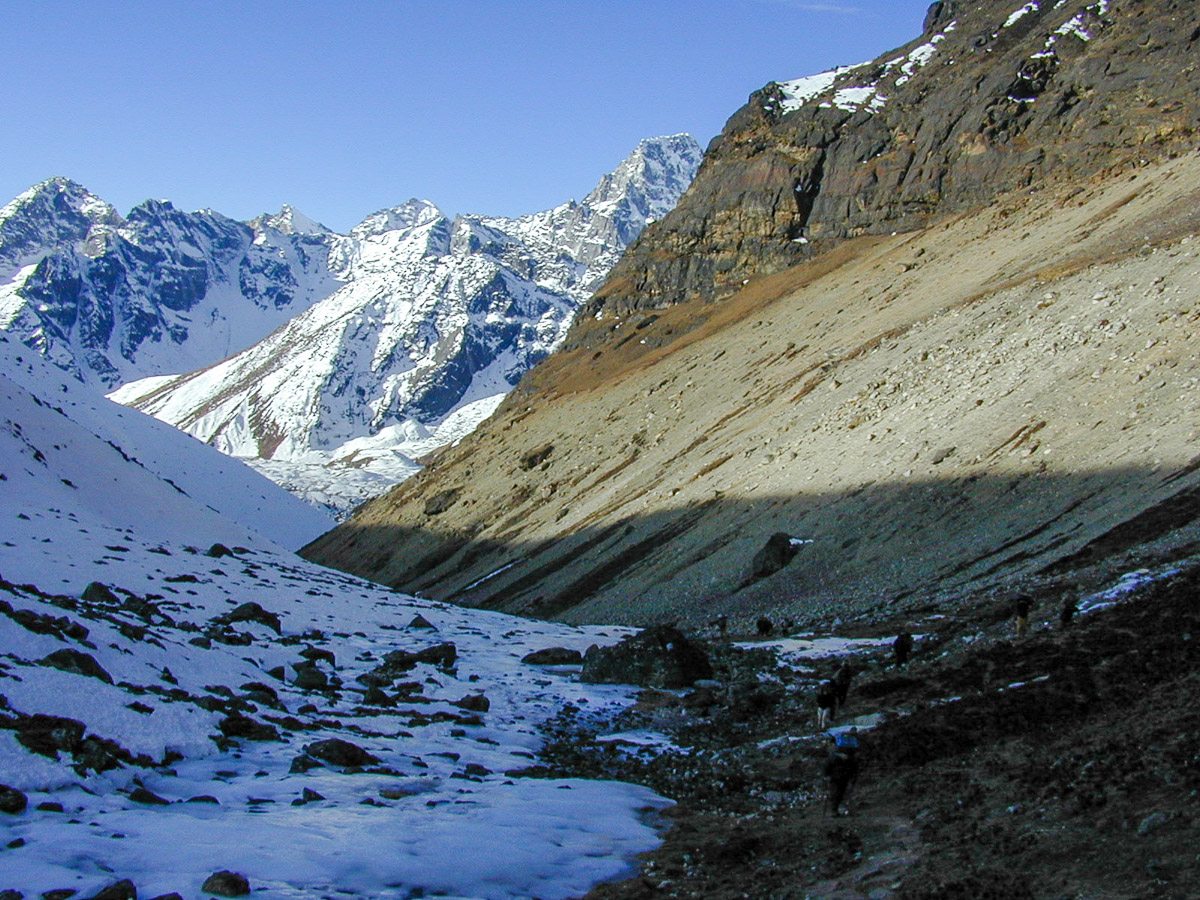
Six hours up steep rock and icy snow to the pass at 17,780 feet made for the most strenuous day we’ve faced so far. Two porters even deserted their loads part way up rather than face the climb!
View Gallery → 25 photos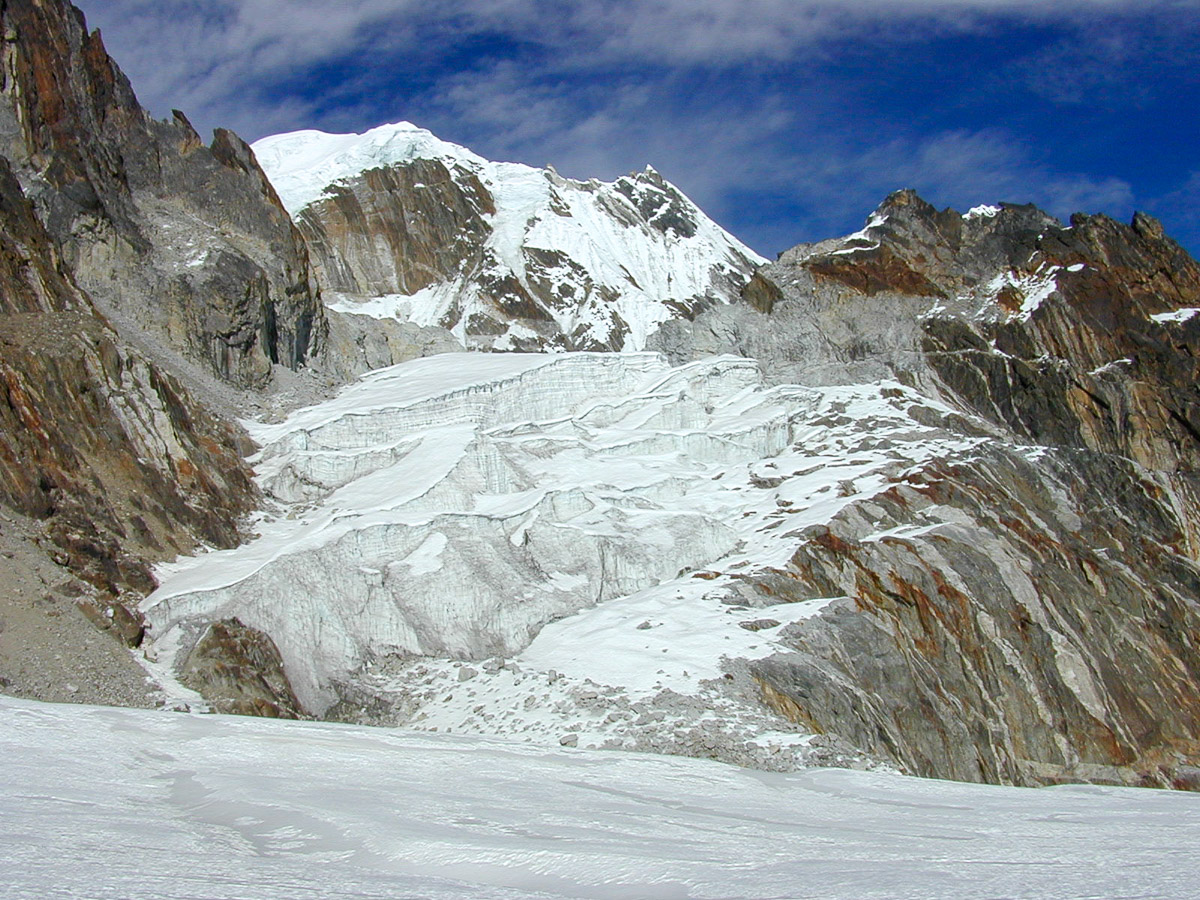
Three hours of descent almost as steep as the climb and we’re thoroughly exhausted, not to mention hungry and thirsty. Despite a couple of surprises when we arrive at our campsite, the day ends with a gorgeous sunset.
View Gallery → 11 photos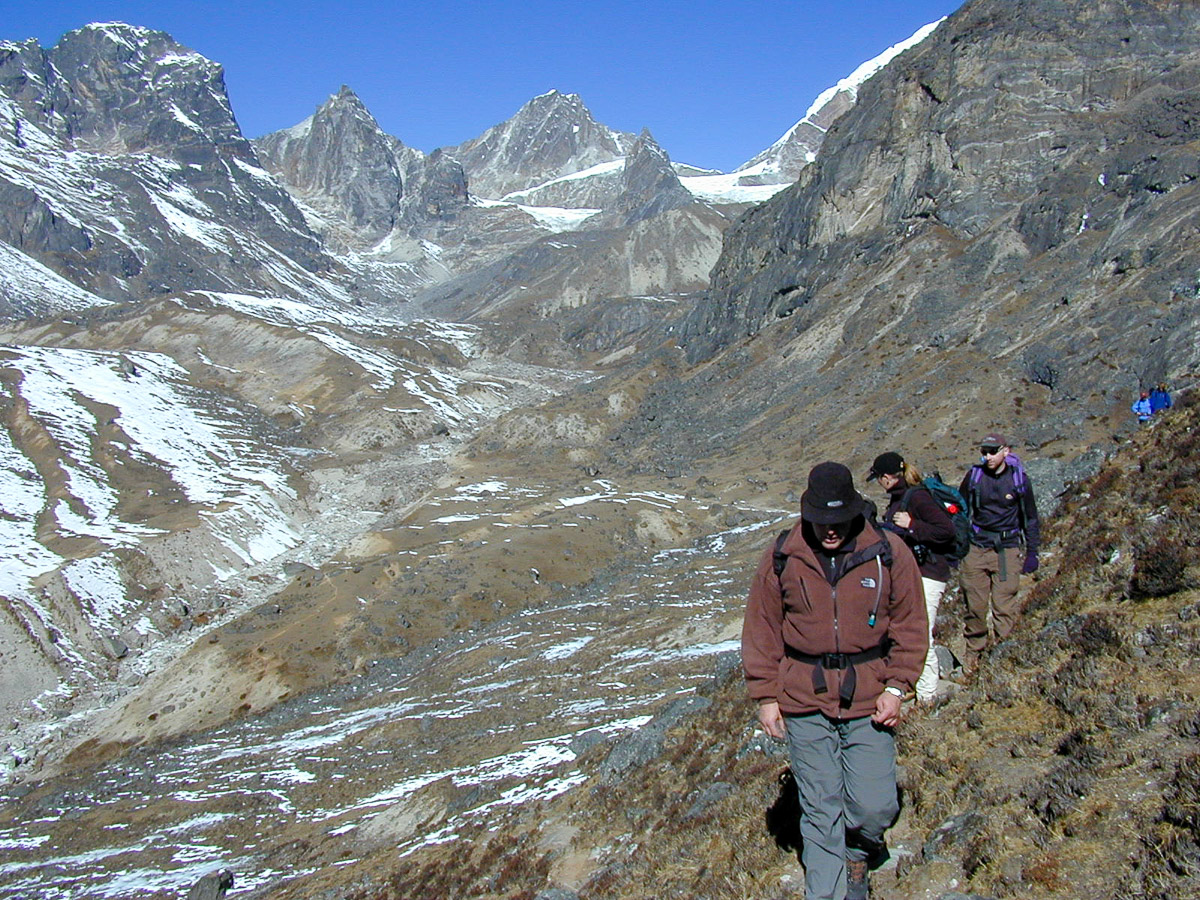
A short stroll around the corner and we’re right on top of the Khumbu Glacier, face to face with some of the tallest mountains we’ve encountered so far.
View Gallery → 8 photos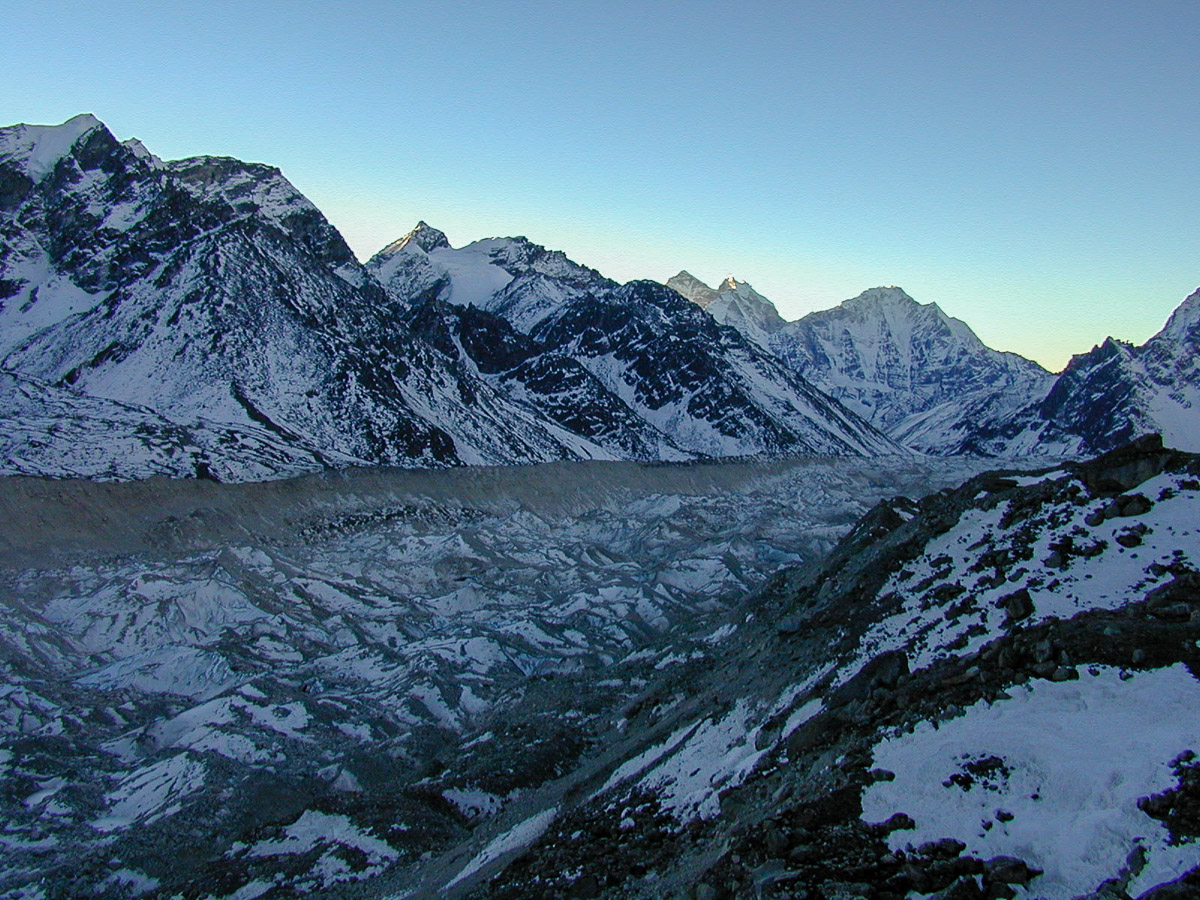
Starting before dawn for the double header - Kala Pattar (18,470’) and Everest Base Camp in one day - I make it up Kala Pattar with plenty of time to enjoy the classic, close-up stunning view of Mt. Everest and surrounding monster mountains!
View Gallery → 13 photos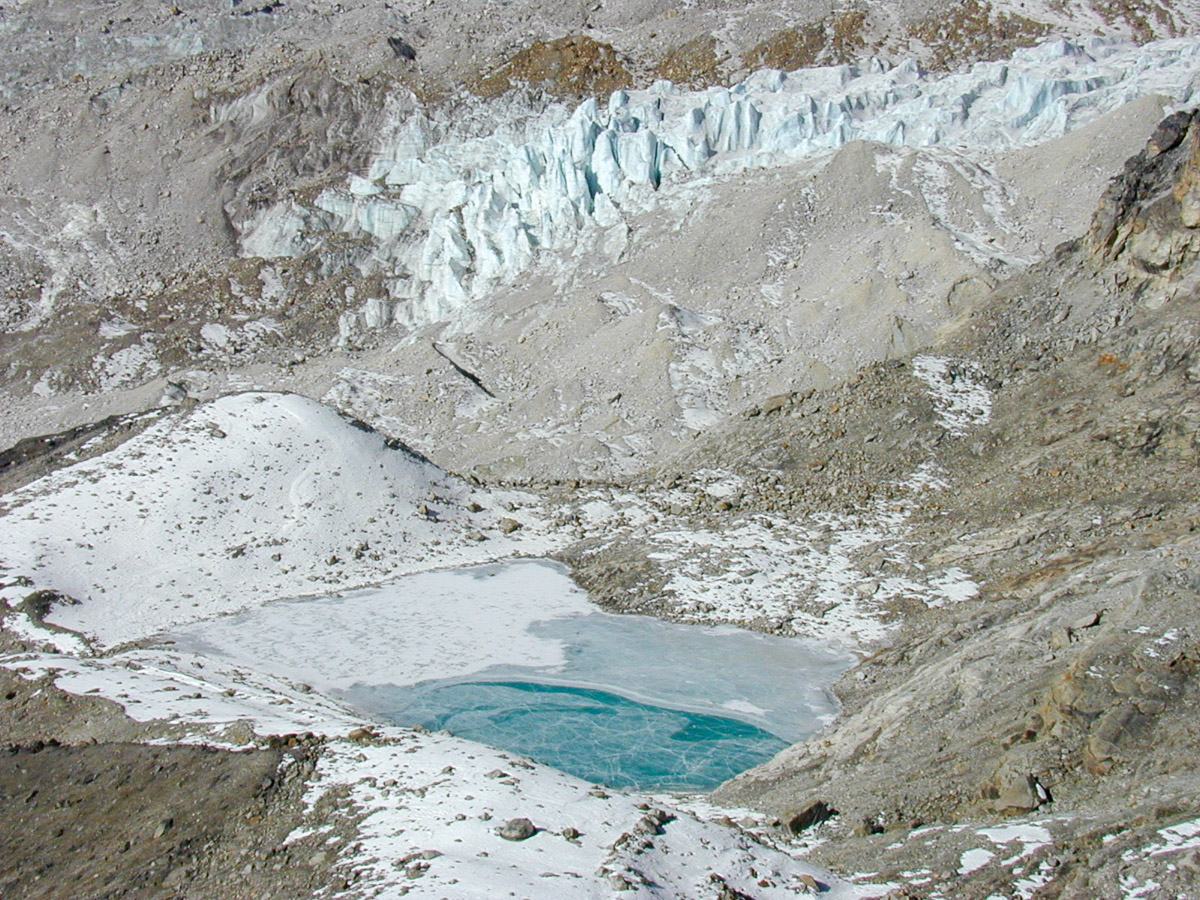
A few more hours of arduous meandering up the glacier and I catch up with the others, then finally we’re there! Where? At a barren pile of rocks below the Khumbu Icefall, otherwise known during climbing season as the Everest Base Camp!
View Gallery → 17 photos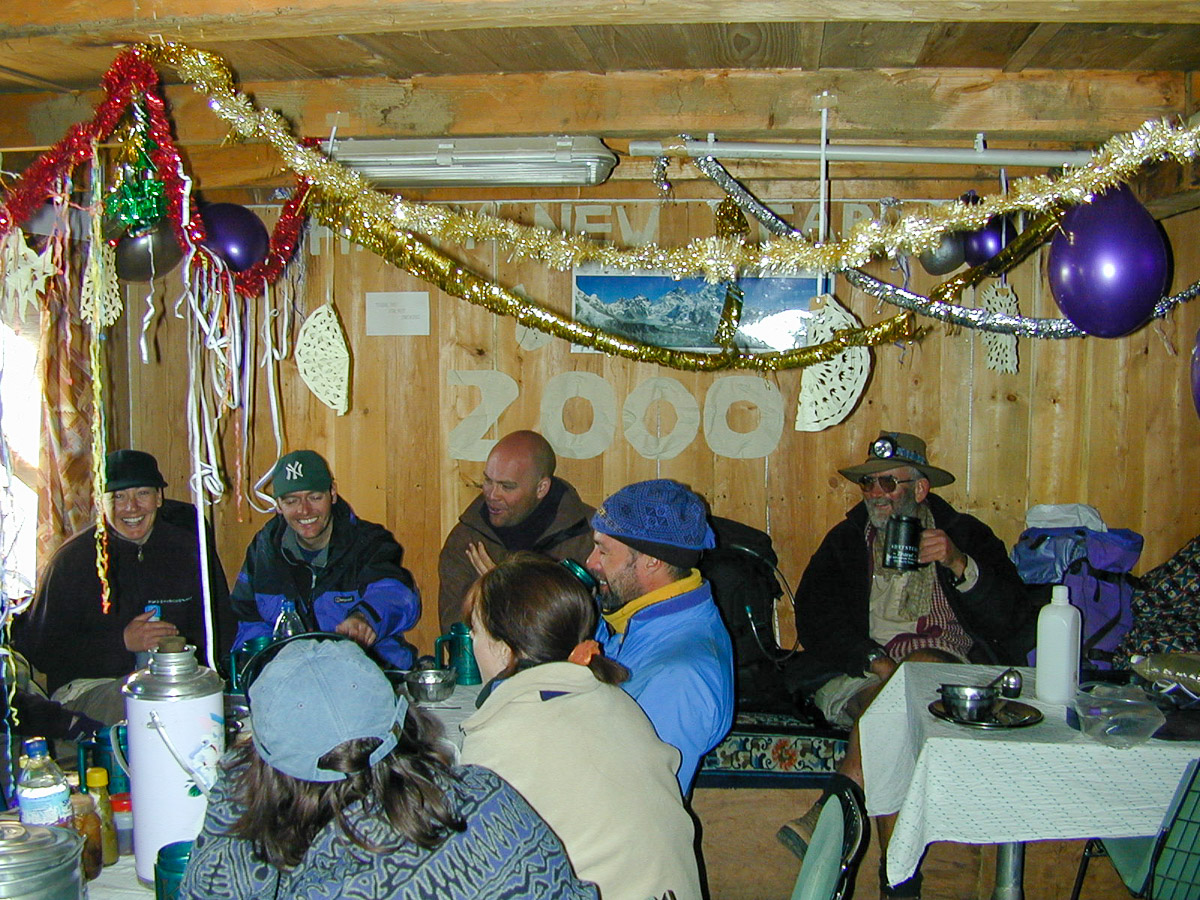
A cozy celebration welcomes in the New Millennium. (Without all the fanfare and hype we all went on this trip to escape!)
View Gallery → 3 photos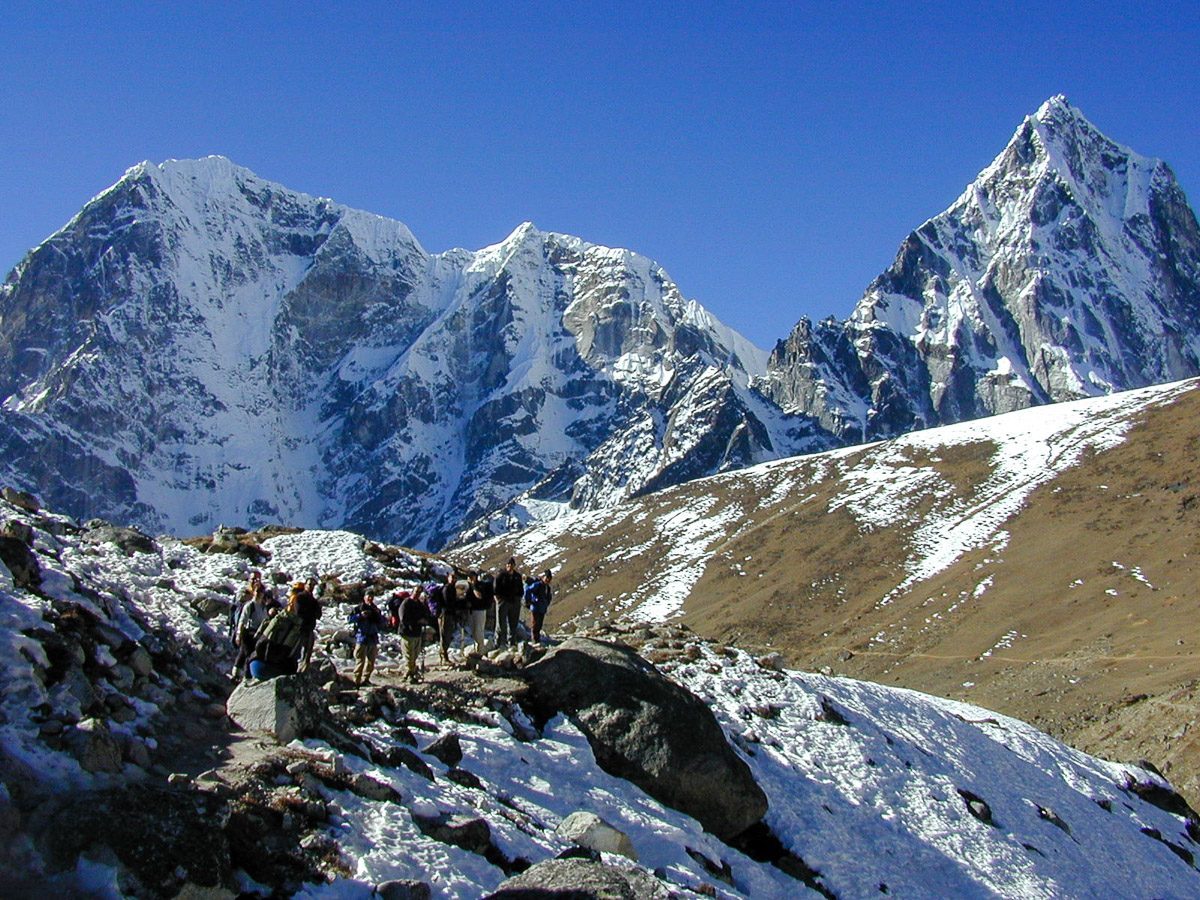
The wide open Lobuche Khola Valley provides vistas of distant peaks that stretch on for miles as we pass prayer monuments and climber memorials that attest to the long and sometimes tragic history of the climbing expeditions to this area.
View Gallery → 22 photos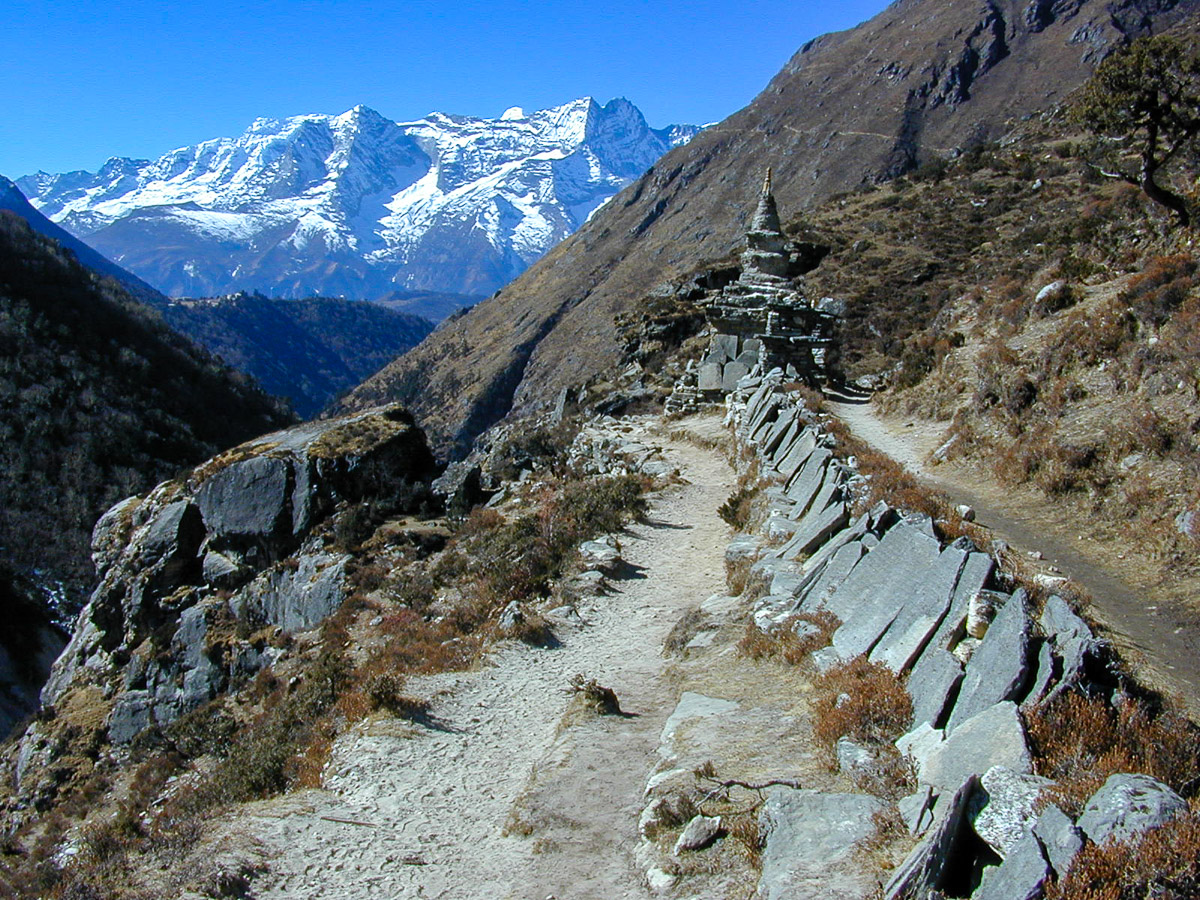
The glaciers have melted down into a rushing river as we descend the steep Dudh Koshi River Valley, and we navigate the many required crossings on suspended foot bridges (wheee!!).
View Gallery → 9 photos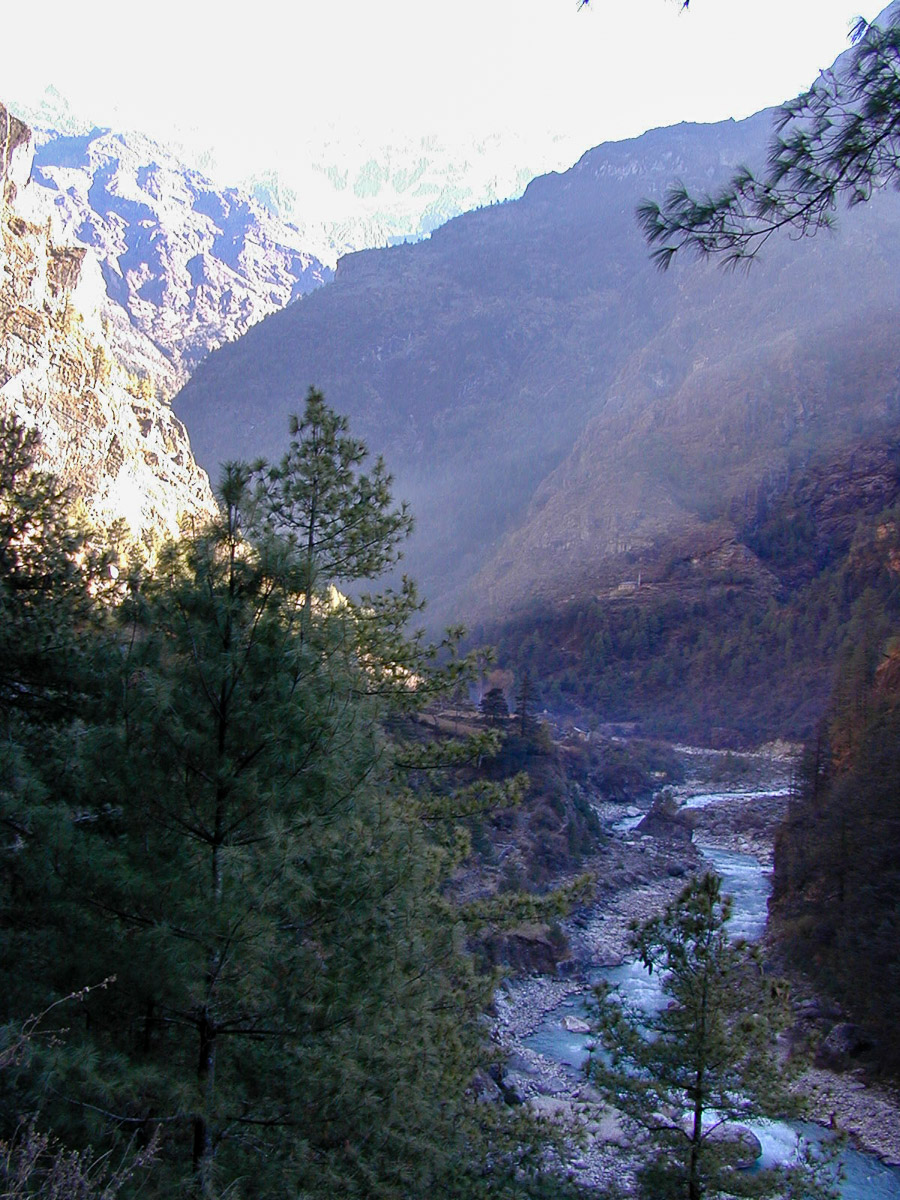
We’re finally back where we started, and our Sherpas show us the native way to dance in celebration of a successful journey’s end.
View Gallery → 13 photos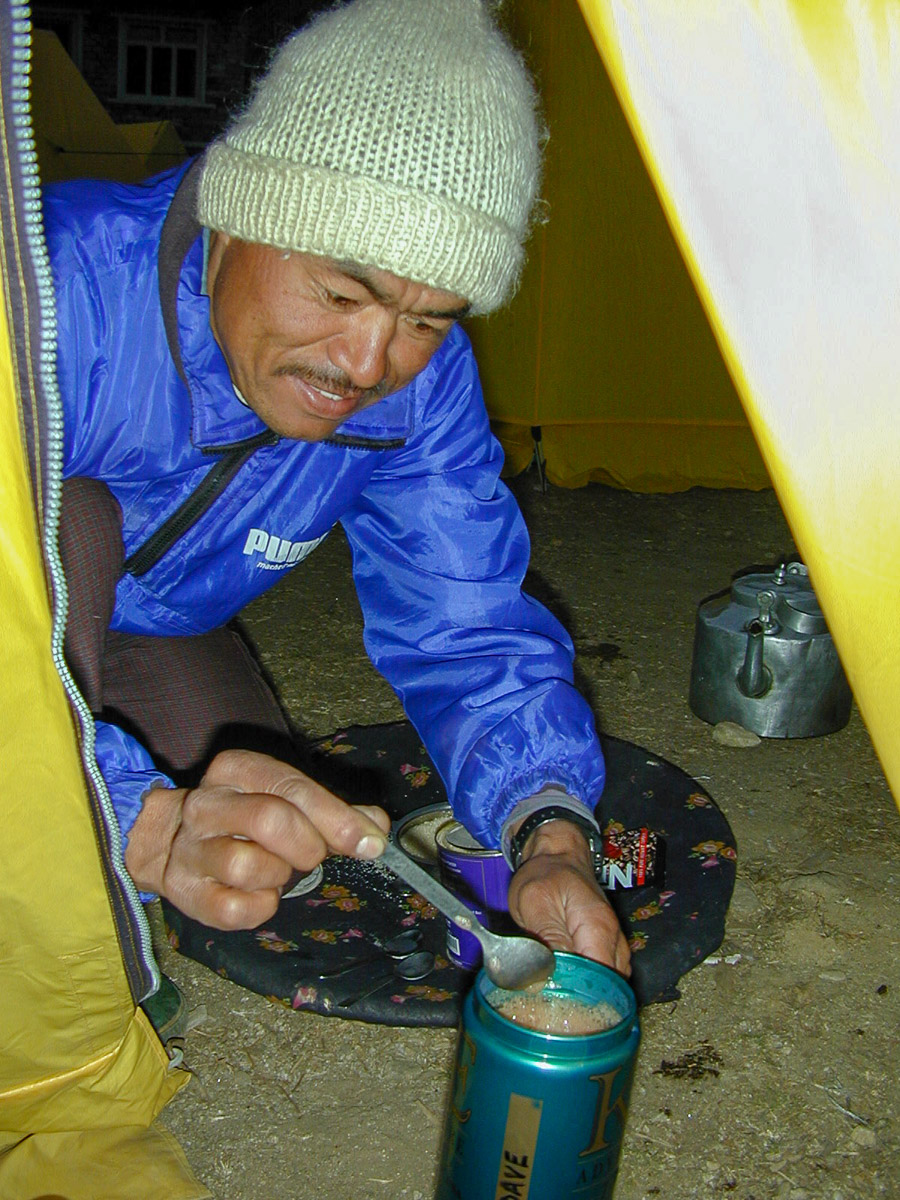
From exhilaration to exhaustion (and back!), a wide range of individual experiences is revealed in these closeups.
View Gallery → 22 photos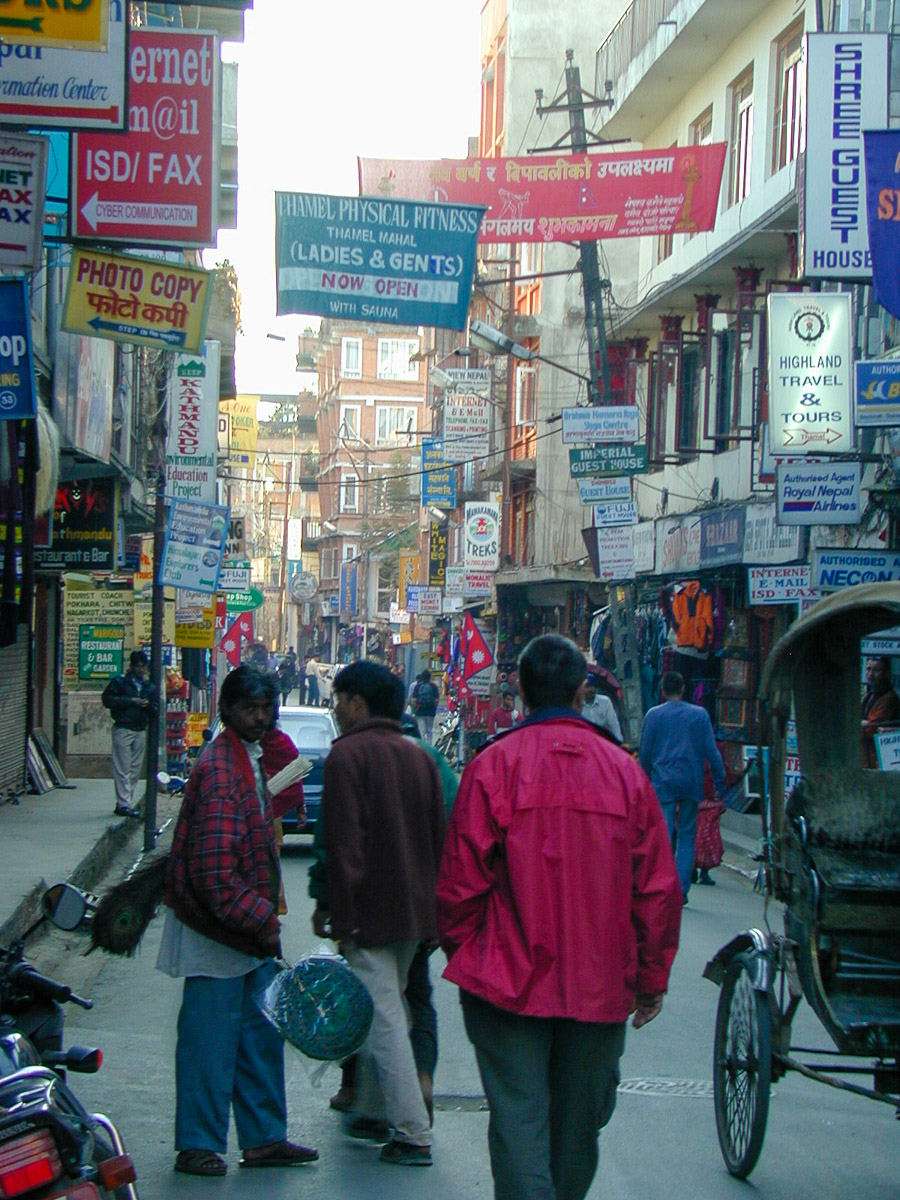
A tour of Kathmandu and nearby Bhaktapur reveal some of the unique facets of Nepalese culture.
View Gallery → 18 photos